Jewish figures have played a leading part in local life.
From an historical perspective, the year of formation of the Jewish community in Southport was 1893. There was no community before that date although a number of Jews lived in the town. The earliest known Jewish family here appears to be the Samuelsons. The Samuelson family would have worshipped in Liverpool pre-1893 on the High Holy Days although immediately before 1893 they would have worshipped in each others’ homes.
Henschel Samuelson (previously Metzenberg, from Breslau, Prussia) settled here around 1873, establishing a high class tobacconist shop on the Neville Street-West Street corner, near the Victoria Hotel. Later, one of his children, George, created the town’s first cinema in the Victoria Hall.
Two events in 1892 helped shape the remarkable history of Southport’s Jewish community.
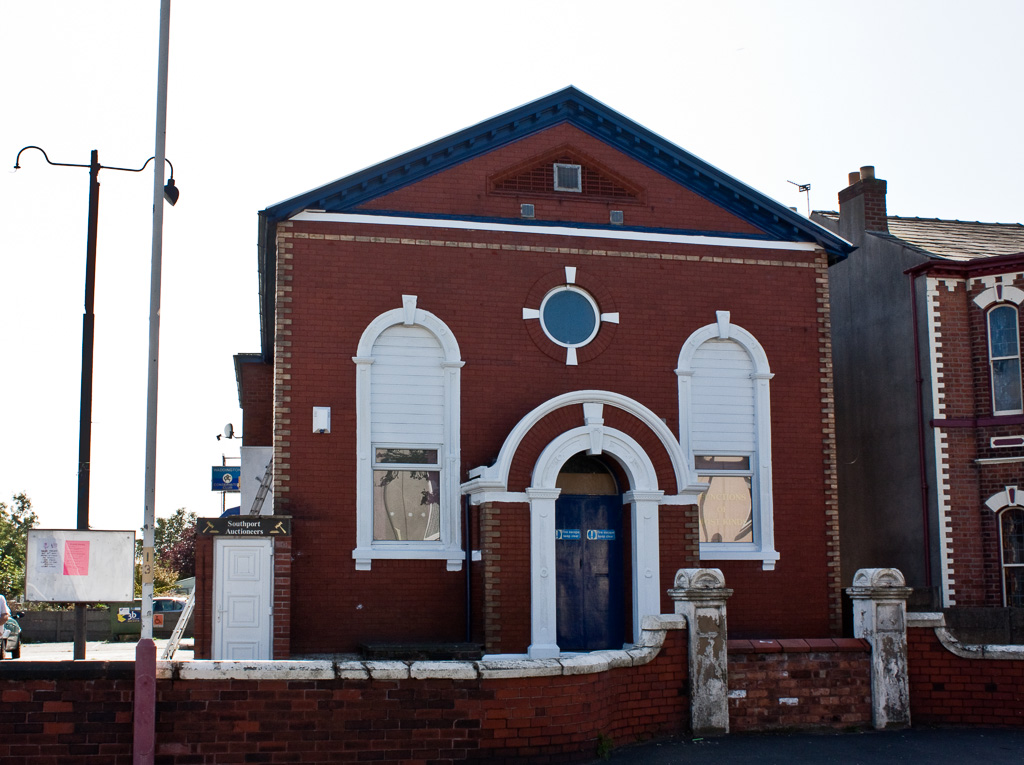 That year saw crucial steps in the formation of both Southport Hebrew Congregation and the resort’s first Synagogue, with the figure of Naphtali Levy – a respected Rabbinical scholar and boot manufacturer – who played a key role in the inception of both.
Rabbi Levy, also a shochet (a pious Jew trained in the slaughter of animals for kosher meat), settled in Southport after he first visited it on doctor’s orders to escape London’s fogs.
Rabbi Levy was born in Kolo (now in Poland) in 1836, came to England in 1874 and was naturalised in 1885. He moved to Southport where he helped to found the Synagogue and became its first treasurer and his efforts led to a meeting in ‘Sorrento’, the first Orthodox Jewish Boarding House at 12 Knowsley Road, opened that year by the wife of Joseph Lambert.
Not only did that meeting point to birth of Southport Hebrew Congregation the following year, a resolution was also carried that donations should go towards obtaining a building for use as a place of worship.
The first Synagogue on the corner of Sussex Road and Windsor Road (previously a chapel for the Plymouth Brethren) was consecrated on May 8, 1893.
This building was reconstructed in 1913, with the facade faced with Accrington brick and an upper level gallery was created to accommodate the ladies of the congregation. The house abutting the Shul was made into a vestry and Cheder. Of the 80 Jewish families in the town at the time, 50 were members of the Shul.
The Jews of Southport were proud of their new status and enthusiastically combined all charitable occasions and celebrations in the Synagogue and in the town. Following its consecration on May 8, 1893, the first Bar Mitzvah in the new Synagogue was that of Lawrence Samuelson on December 10.
The following week the Sabbath religious classes commenced and the first wedding there was consecrated on December 24, between Ralph Hurwitz and Rachael Price.
The resort’s first Jewish burial ground was acquired from Southport Corporation by the Synagogue’s trustees in May 1894. It had to be consecrated earlier than intended as it was required for the burial of Mr J. Hompes, a ceremony which drew not only Jews but several hundred people of other faiths.
In the space of one year there was an established Synagogue, a full-time minister, and the cemetery (within Duke Street Cemetery – to be found in the section alongside Cemetery Road).
It was 1896 when Hebrew classes started to be held on Sundays and Thursdays, and building was completed of a new Mortuary Hall.
The Chief Rabbi Rev Dr H Adler visited Southport for the benefit of his health and stayed at the Shul President’s house in Knowsley Road. Even in those early years it boasted its own Choir.
The community was served for its first 35 years by the Reverend Noah Blaser, who was also Shochet, teacher and general factotum, when around 30 Jewish families then lived in the town.
The Chief Rabbi visited again in 1901 and in light of this religious classes were established on every day except Wednesdays and Fridays.
The history of the settling of the Jews in Southport include Mr & Mrs S. Tarshish who had one of the few Jewish hotels here, in Bank Square, during the early 1900’s and Myer Tarsh was one of the few bookmakers (Hoghton Street) for sometime.
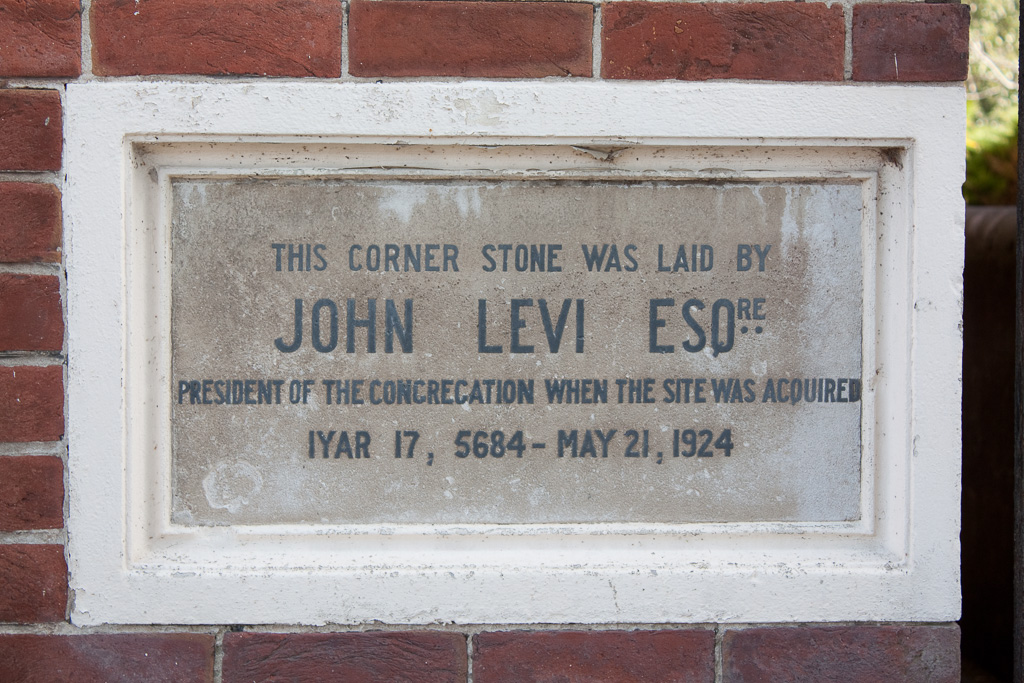
By then the number of families had grown to 40, about 100 people, and by the early 1920s the Jewish population here had increased to at least 500, and by 1926 the new and impressive Synagogue, in Arnside Road, had been established.
The synagogue’s car park was the site of the old ‘Hare and Hounds’ beerhouse, on the corner of Ball Street (now Trinity Mews) and Fleetwood Street (now Arnside Road).
Looking more like a house, it had a famous gas lamp standard with a blue lantern at the front, and thrived from 1874 until it closed in 1921. From then on it became a caretaker’s house for the Synagogue, and was only demolished in November 1985.
Due to air raids from 1939 a mass evacuation was carried out in Liverpool and Manchester – the latter being one of the largest evacuations of a single area.
Manchester had a large Jewish community, many of whom had settled in the city in the 19th and early 20th centuries, but as the Nazis took control of Germany many Jewish refugees came to the North West to escape persecution. Many were housed in hostels, including some 20 female Jewish refugees at Southport’s Harris House on 27 Argyle Road.
Particularly moving are their diary entries telling the story of their stay here.
In June 1982 a reunion of some Jewish refugees, who had been saved from Hitler’s notorious gas chambers, was organised, resulting in an emotional encounter at Harris House where they had found wartime sanctuary.
Harris House was the ad hoc name of the Southport Jewish refugees’ hostel on the Hesketh Road corner, named after Miss Jose Harris (later Mrs Stross, of Harewood, Yorkshire), who lent her home for the purpose. The girls were there from February 1939 until May 1940. It was a short time in the span of local history but a most important stage in the rehabilitation of these girls, who had just been parted from their parents, most of whom they would never see again.
By the early 1950s the Jewish population had reached its zenith of 3,000 and in 1954 the new communal Amelan Hall was constructed at the rear of the Arnside Road Synagogue.
Southport now boasts two synagogues, on Portland Road and Arnside Road and the last known figure of Jewish people living in the town was 600, recorded in the 2001 national Census.